Disposable vapes are small, brightly colored, and easy to carry. Yet their convenience has raised difficult questions for public health, waste management, and regulators. The answer to “why are disposable vapes being banned in some countries” is rarely just one concern. Policies differ, and restrictions reflect local evidence, priorities, and enforcement challenges.
Youth use is one documented concern. The U.S. Centers for Disease Control and Prevention’s 2024 National Youth Tobacco Survey reported that about 1.63 million middle and high school students currently used e-cigarettes. Among these users, 55.6% reported using disposable devices. Those figures do not explain every national policy, but they help show why access and appeal feature in public debate. The World Health Organization’s 2023 tobacco epidemic report also highlights the need to protect young people from nicotine products and marketing.
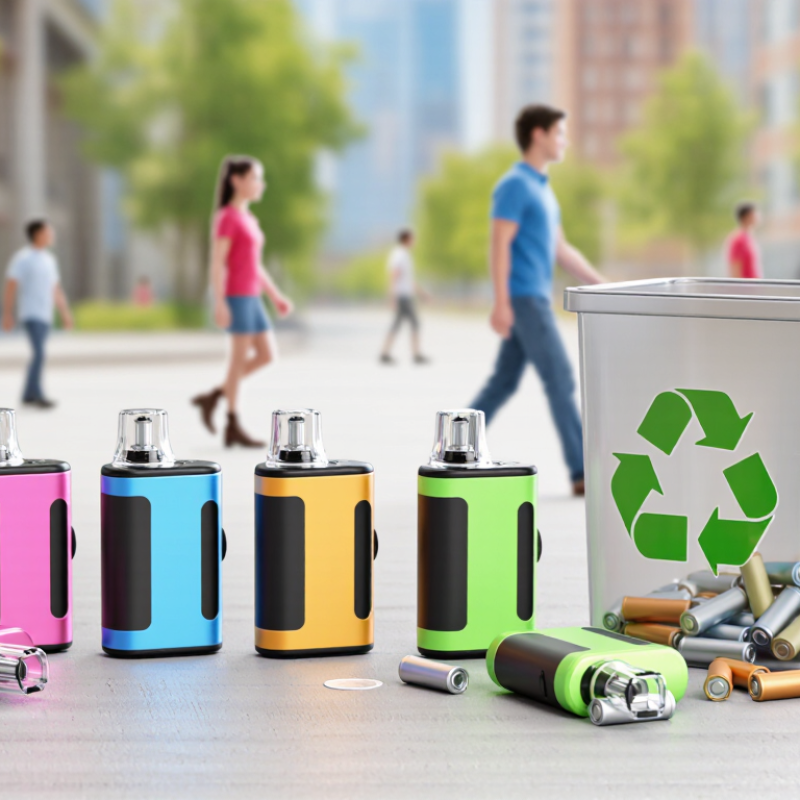
Waste creates another visible pressure. Material Focus, a UK nonprofit focused on electrical recycling, estimated in its 2023 research that around five million disposable vapes were discarded weekly in the UK. Each small device can contain a battery and electronic components, making careless disposal more than a litter problem. The picture is not tidy: data methods and policy goals vary, and a ban alone cannot solve every issue. Still, these reports offer a grounded starting point for understanding why some governments choose tighter controls, while others pursue different approaches.
What Disposable Vapes Are and How They Work
A disposable vape is a compact electronic device that heats liquid to create an inhalable aerosol.
Many liquids contain nicotine and flavorings, though ingredients vary. Inside, a small battery powers a heating element beside a reservoir or absorbent wick. When someone draws on the mouthpiece, airflow may activate the heater. The warmed liquid becomes aerosol, which travels through the mouthpiece.
It is not simply water vapor.
The U.S. National Academies’ 2018 report, Public Health Consequences of E-Cigarettes, describes these basic components and notes that aerosols can contain nicotine and other chemicals.
Think of a tiny kettle, but without boiling water.
The comparison is imperfect. Heating temperature, liquid composition, and puff duration can affect the aerosol produced. Some models use a button instead of draw activation. The word “disposable” also hides a mix of parts: a battery, electronics, and a liquid reservoir inside one small casing. That design is convenient to use, but it can make the device’s contents and eventual waste less visible.
Usage data help explain public attention to the format. In the CDC’s 2023 National Youth Tobacco Survey, 2.13 million U.S. middle and high school students reported current e-cigarette use. Among those users, 60.7% reported using disposable products. The survey measured reported use, not emissions or personal exposure.
That distinction matters.
A simple-looking device can involve more than a simple puff.
Which Health Risks Prompt Government Restrictions?
Disposable vapes may expose users to nicotine, fine particles, and chemicals that can irritate the lungs. Nicotine can cause dependence, and it may affect brain development in adolescents. Some devices also release trace metals from heating components. The amounts vary, so one product’s risk cannot describe every device.
The evidence is still evolving. That matters. Researchers need more time to understand the effects of long-term use. Governments may restrict disposable products because they are easy to carry, can appeal to young people, and may deliver addictive nicotine. Restrictions are also shaped by concerns about accidental exposure to vape liquid, especially for children. These concerns do not mean every user will become ill; they point to risks worth reducing.
Tips: Check whether a product contains nicotine, and keep devices and liquids away from children. If vaping causes coughing, chest discomfort, or breathing problems, stop using it and seek medical advice. Avoid assuming that a flavored aerosol is harmless because it smells mild.
Why Disposable Vapes Face Restrictions: U.S. Youth Vaping Data
U.S. survey results show that youth e-cigarette use declined from 2022 to 2023, while disposable devices made up a larger share of current youth users.
Why it matters: Governments cite concerns including youth nicotine addiction and exposure to aerosol that can contain harmful substances. Nicotine can harm adolescent brain development. These survey figures describe use patterns; they do not measure health effects or prove that restrictions caused the changes.
Sources: CDC and FDA, National Youth Tobacco Survey, 2022 and 2023. “Current use” means use on at least 1 day in the past 30 days. Disposable-device figures are the share of current youth e-cigarette users.
Why Youth Access Influences Vape Policy
Disposable-vape policy debates often begin with a practical question: can adults keep products away from minors? The CDC and FDA’s 2024 National Youth Tobacco Survey found 1.63 million U.S. middle and high school students currently used e-cigarettes. Among current users, disposable devices were the most commonly reported type, at 55.6%. The survey also found that 87.6% used flavored products. These figures describe U.S. students, not every country, and do not prove one product feature caused use. Still, they show why youth access weighs heavily in policy choices. That matters.
For regulators, access means more than a shop counter. Online age checks, appealing packaging, easy-to-carry devices, and adult oversight all shape how reachable products feel to teenagers. WHO’s 2024 brief on electronic cigarettes calls for regulation that protects young people. Policies may combine age-verification rules, retail compliance checks, and limits on youth-oriented design. Evidence should guide each step; broad restrictions can also affect adult smokers seeking alternatives, so outcomes deserve monitoring. A weak point remains: surveys capture reported use, but not every route of access. I keep coming back to that gap. Better local research can show whether rules reduce youth access without assuming every teenager’s experience is the same.
How Countries Design and Enforce Disposable Vape Bans
Countries design disposable vape bans by defining exactly what counts as disposable. Some rules focus on products that cannot be refilled; others also consider whether the battery can be recharged. That detail matters. A clear definition helps customs officers, retailers, and inspectors apply the same standard. It also reduces confusion for consumers comparing products on a shop shelf.
Enforcement usually combines product checks, retailer guidance, and penalties for non-compliance. Inspectors may review packaging, invoices, and stock records, while border agencies check shipments against local requirements. Clear notices and staff training can prevent accidental sales. But enforcement is not just about inspections. Authorities can track product seizures, retail availability, and youth access to assess whether a policy is working. Results may take time, and informal sales can be difficult to measure. That is a real limitation. Rules also need practical updates as product designs change. A ban can look simple on paper, yet inconsistent definitions or limited inspection resources may weaken its impact. Reliable evaluation should draw on public health data and transparent reporting, not assumptions alone.
How to Understand Why Some Countries Ban Disposable Vapes? - How Countries Design and Enforce Disposable Vape Bans
| Country or jurisdiction |
What the policy prohibits |
Start date or legal status |
How enforcement is designed |
Policy concerns addressed |
Official information |
| United Kingdom |
Manufacture, import, sale and supply of single-use vapes. A device is generally considered single-use if it cannot be recharged and refilled. |
The ban took effect on 1 June 2025. |
Retailers and suppliers must ensure products meet the rechargeable-and-refillable requirements. Local Trading Standards authorities enforce the rules, with penalties available under the regulations. |
Reducing waste from discarded batteries and devices, limiting access by young people, and encouraging reusable alternatives. |
UK Government guidance |
| Belgium |
Sale of disposable electronic cigarettes. The measure targets the disposable product category rather than banning every type of vaping device. |
The sales prohibition took effect on 1 January 2025. |
Federal public-health authorities oversee tobacco and vaping-product rules, including checks on retail sales and product compliance. |
Public-health concerns, including youth access, and environmental concerns associated with single-use devices and their batteries. |
Belgian Federal Public Service Health |
| New Zealand |
Manufacture, import, sale and supply of disposable vaping products under the disposable-vape restrictions. |
The restrictions took effect on 17 June 2025. |
Retailers, importers and manufacturers are subject to national vaping-product rules. The Ministry of Health and other relevant authorities monitor compliance and may take enforcement action. |
Reducing the appeal and availability of disposable products, particularly for young people, and addressing waste from products designed for short-term use. |
New Zealand Ministry of Health |
| Australia |
Importation of disposable vapes is prohibited, subject to limited exemptions such as certain medical or scientific purposes. This is an import restriction; Australia’s broader domestic supply rules are a separate part of its vaping framework. |
The disposable-vape import ban began on 1 January 2024. Further national import controls took effect on 1 March 2024. |
The Australian Border Force enforces import controls at the border. Therapeutic Goods Administration rules govern relevant vape products and supply pathways within Australia. |
Reducing youth access and controlling the import and supply of vaping products, alongside concerns about product safety and environmental waste. |
Australian Therapeutic Goods Administration |
How to compare these policies: “Ban” does not always mean the same thing. Some countries prohibit retail sale or supply; others focus on manufacture or imports. Check the scope and effective date in the relevant national rules before comparing enforcement or market impact.
Conclusion
Disposable vapes are single-use electronic devices that heat a liquid to create an inhalable aerosol, then are discarded when their battery or liquid runs out. Governments considering restrictions often weigh concerns about nicotine dependence and possible effects on developing brains and respiratory health. The question “why are disposable vapes being banned in some countries” also reflects environmental pressures: their plastic casings, batteries, and leftover components can add to litter and electronic waste when they are not collected or recycled properly.
Youth access is another major policy concern, as colorful designs, easy availability, and low-cost options may appeal to younger people. In response, countries may restrict sales, imports, advertising, or product features, while setting rules for retailers and waste handling. Enforcement can involve inspections, penalties for noncompliance, and public information campaigns. The approaches differ, but they generally aim to reduce health risks, limit youth access, and prevent avoidable pollution.

 Droned Vape