A vape can look convincing under bright shop lights. Its box may be glossy, the seal neat, and the flavor name familiar. Yet appearance alone cannot confirm authenticity. To understand how to tell if a vape is fake or authentic, check the manufacturer’s verification tools, packaging details, batch information, and the retailer’s credentials. Compare the printed code with the brand’s official website or support team. A code that fails, repeats, or leads to an unfamiliar page deserves caution.
Dr. Konstantinos Farsalinos, a physician and e-cigarette researcher, has emphasized that product claims should be judged by evidence, not appearance. This is a paraphrase of his broader research perspective, not a direct quotation. Treat any single sign as a clue, not proof. Look closely at spelling, uneven printing, loose seals, and mismatched product names. Keep the packaging and receipt in case you need to contact the seller or manufacturer. Small details matter. Still, verification systems can be imperfect, and a copied code may appear genuine. That part is easy to overlook. This guide focuses on practical checks and careful decisions, without promising certainty from a photo or quick inspection. When key details do not match, pause and seek confirmation from the brand before using the product.
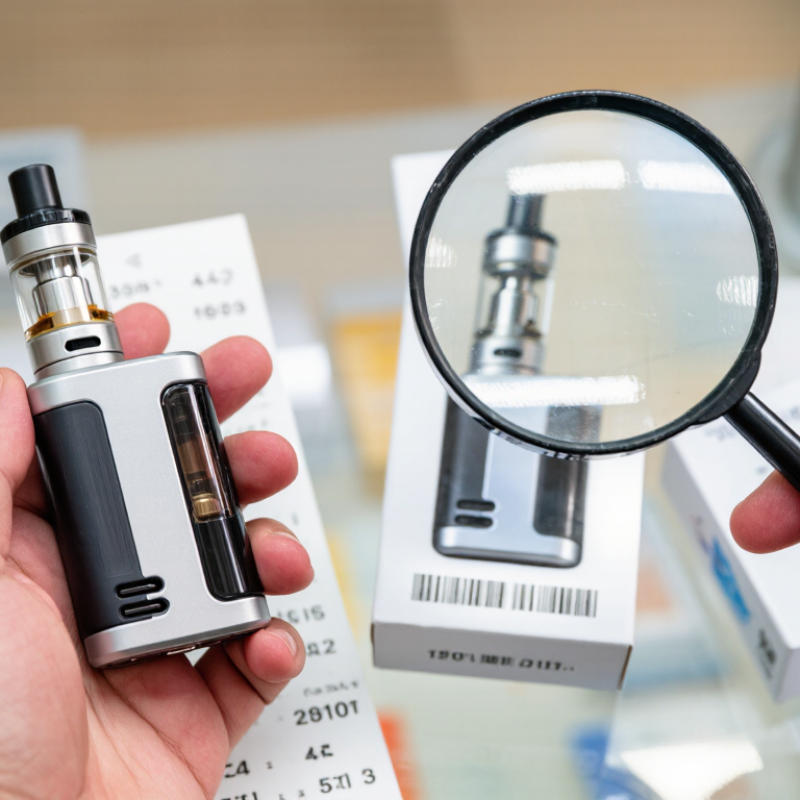
A careful check starts with the exact product name and version. Compare the device, packaging, and listed specifications with information from the manufacturer’s official website or support channel. Look for mismatched model numbers, spelling errors, blurry print, or a seal that appears lifted or resealed. Small details matter. A convincing box alone proves very little.
Inspect the device itself. Its finish should look consistent, with clean seams and clearly printed markings. Check that the flavor, nicotine strength, capacity, and other product details match across the box, device, and accompanying leaflet. If there is a batch or verification code, enter it only through the manufacturer’s official channel. A copied code can still appear genuine, so one successful scan is not a guarantee. No single check settles it. If the details conflict, or the device has a burnt smell, leaking liquid, or unusual damage, stop using it and ask the seller or manufacturer for clarification. Even a thorough inspection has limits; uncertainty is worth taking seriously.
Use several checks together. Packaging and appearance can provide clues, but no single visual feature proves that a product is genuine or safe.
| What to Check | More Reassuring Signs | Warning Signs | How to Verify | What It Can Tell You |
|---|---|---|---|---|
| Seller and purchase record | Useful supporting evidence Purchase from an authorized or otherwise traceable retailer; keep the receipt. |
Higher risk Unusually low pricing, no seller contact details, or payment and delivery details that cannot be verified. |
Check the seller’s authorization through the product maker’s official customer-service channel. Compare the receipt and seller details. | A traceable supply chain supports confidence, but a receipt alone does not authenticate the device. |
| Packaging and print quality | Consistent printing, legible instructions, and packaging that matches current product information. | Misspellings, blurry text, inconsistent colors, damaged seals, or labels pasted over conflicting information. | Compare with current packaging images or instructions from an official source for the same product and market. | Packaging discrepancies are clues, not proof; genuine packaging can change by region or production run. |
| Lot, batch, or serial details | Codes are clearly printed and can be checked using a genuine verification service, when one is provided. | Missing, altered, duplicated-looking, or unreadable codes; a verification page that does not belong to the official product maker. | Enter the code only on a website reached through the maker’s independently verified official site, or contact its support team. | A valid code can be copied or reused, so a successful scan is not conclusive on its own. |
| QR code and web link | The code leads to a correctly spelled, secure official domain and relevant product information. | Unexpected redirects, misspelled domains, requests for unnecessary personal data, or a page that only confirms authenticity without product details. | Inspect the destination address before opening it. Navigate to the official site independently rather than relying only on the QR code. | QR codes are easy to reproduce; they are a navigation tool, not proof of authenticity. |
| Label and product information | Product name, nicotine information where applicable, ingredients or contents, warnings, and manufacturer or importer details are clear and consistent with local rules. | Conflicting information between the device and box, missing required warnings, or unclear responsible-party details. | Check the applicable rules for the country or region of sale and compare the details with official product documentation. | Label requirements differ by market, so a label from another region may look different without being counterfeit. |
| Device construction | Parts fit securely; the mouthpiece, seams, and buttons show no obvious damage or residue. | Loose parts, leakage, unusual odor, visible residue, sharp edges, or signs of tampering. | Inspect without opening, modifying, or attempting to repair the device. Compare its design with official product information. | Build quality can raise concerns, but a well-made device is not necessarily authentic. |
| Charging and battery details | Charging instructions and electrical ratings are clearly stated where required and match the product documentation. | Unspecified charging requirements, damaged ports, overheating, swelling, hissing, or a burning smell. | Follow the manufacturer’s instructions and use only compatible charging equipment. Stop using a device showing battery damage or abnormal heat. | Battery problems require caution whether the product is counterfeit or genuine. |
| Consistency across the package and device | Model, flavor or variant, capacity, and other listed specifications agree across the box, device, and official product information. | Different model names, contradictory specifications, or a product variant not listed in reliable official information. | Check the exact model and market version with the product maker or relevant local regulator. | Inconsistency is a reason to pause and verify; regional versions and product revisions can differ. |
| Overall decision | Several checks align Seller, codes, labels, and product details are mutually consistent. |
Unresolved concerns Multiple discrepancies, an unverifiable seller, or signs of damage or tampering. |
Do not use a product you suspect is counterfeit or damaged. Contact the seller, product maker, or relevant local consumer-safety authority. | No checklist can establish authenticity with certainty. Treat verification results as evidence to assess, not a guarantee of quality or safety. |
Important: Requirements and packaging vary by jurisdiction and may change over time. This checklist is for consumer verification, not a laboratory test or a safety certification.
Check printing, colors, sealed edges, spelling, product name, flavor, nicotine details, and batch number. Compare box and device details. Small clues matter.
No. Security features vary, and a QR code alone does not prove authenticity. Visit the manufacturer’s verified website independently and follow its instructions.
Type the official website address yourself, then use its verification page or app. If a code is scratched off, duplicated, or rejected, contact official support before using the device.
Under bright light, inspect the casing, seams, mouthpiece, buttons, display, and charging port. Gaps, sharp edges, wobbling parts, or poor fit may suggest weak quality.
Stop if it leaks, smells unusual, overheats, or has damage near its battery area. Ask the seller or manufacturer for guidance. Do not dismantle it.
No. A valid result is helpful, but cloned codes and convincing packaging can mislead. No single test settles everything.
Keep the box and receipt. Take clear photos of the label, and share relevant details through an official channel. Avoid posting codes publicly.
Treat blurry print as a clue, not proof; shipping damage can also affect legitimate packaging. If model, flavor, or batch details conflict with official records, pause and ask for guidance.
Knowing how to tell if a vape is fake or authentic starts with checking the product’s basic details. Compare the device name, model, flavor or variant, and listed specifications with information provided through the manufacturer’s official channels. Examine the packaging for clear printing, consistent labels, intact seals, and security features such as a verification code. Errors, mismatched details, damaged packaging, or codes that cannot be confirmed may warrant caution.
Next, inspect the device and its components for poor assembly, loose parts, unusual odors, leaks, or materials that look inconsistent with the product description. Use only official verification tools or customer-support contacts to confirm a product’s status, and avoid relying on a seller’s claims alone. If details remain uncertain or the device appears damaged, do not use it; keep the packaging and contact the manufacturer or seller for guidance. When in doubt, choose caution over assumption.

 Droned Vape